Complete the form and one of our assistants will contact you to coordinate your appointment at our medical center.

For more information or to schedule an appointment, contact us. We are here to take care of your oral health!
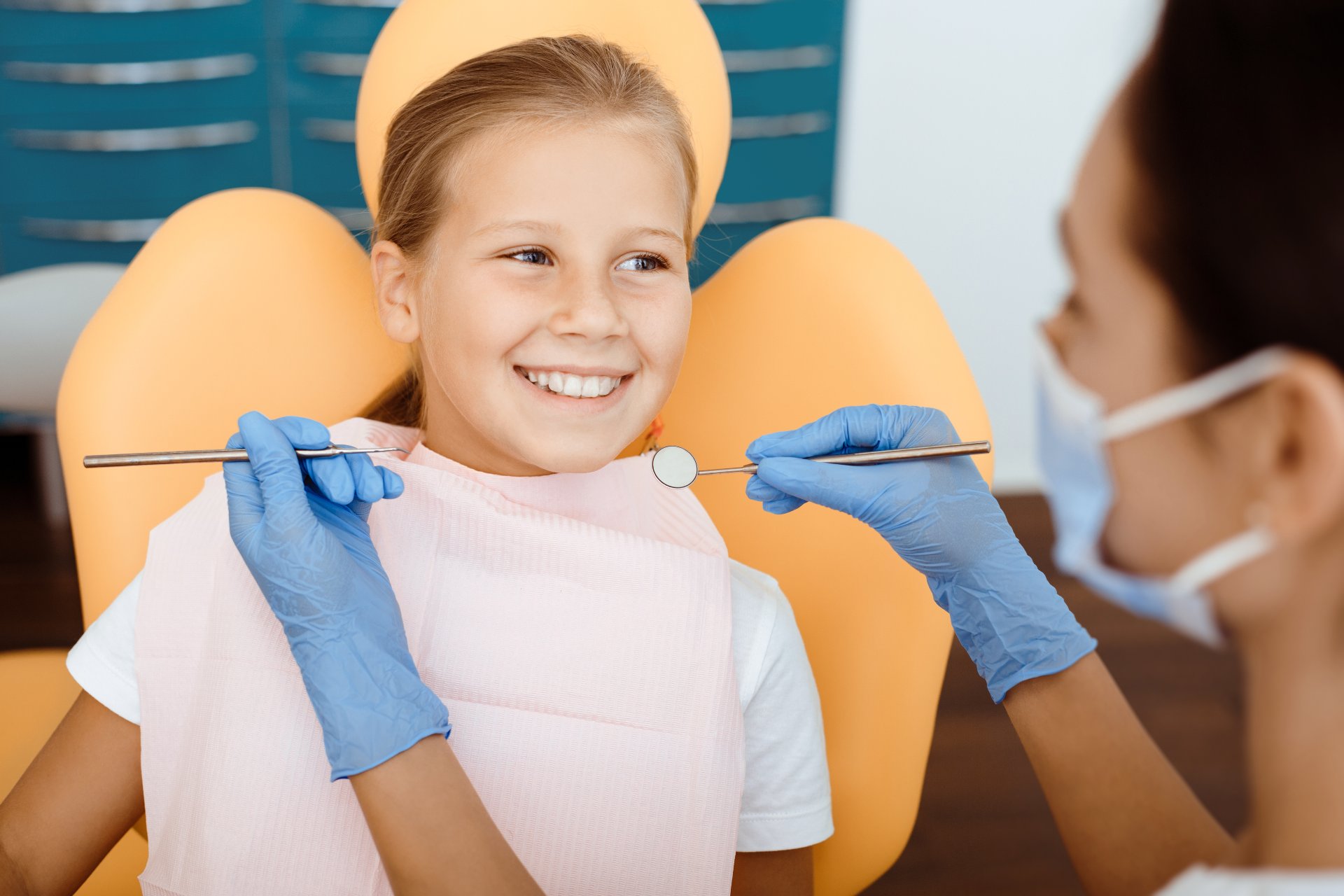
One of the most frequently asked dental questions is when to start taking a child to the dentist. According to the recommendations of the American Academy of Pediatric Dentistry (AAPD), your child can start going to the dentist between six months and, at the latest, one year of age. It is essential to take your child to the dentist before the age of one because this is the period when baby teeth usually begin to erupt. The dentist should examine the health of your child's first teeth. After that, you should schedule a check-up for your child every six months.
If your child is anxious about visiting the dentist, we recommend that you bring them to our office for a pre-visit prior to their actual appointment. If this is not possible, consider showing them pictures of our staff and office on our website. This will allow them to get comfortable with the space beforehand. You can also play games with your child or use a cloth to wipe their teeth after eating to prepare them for their first visit. Explain to your child how important it is to have healthy teeth and that the dentist wants to help them achieve this. It's also important to lead by example. Make sure they see you practicing good oral hygiene habits, such as flossing and brushing. Also, be positive about the dentist, as children often sense dental fear or anxiety in their parents.
Children should have regular dental checkups every six months. At semi-annual check-up appointments, we can clean their teeth to remove plaque or tartar build-up and prevent more serious problems in the future. Because children grow and develop so quickly, semi-annual dental checkups also allow us to examine any possible abnormalities in your child's bite, facial structure, tooth mobility and tooth spacing. If we notice any new problems since the last checkup, we can offer the correct and effective treatment. Taking your child for routine dental checkups from an early age also reinforces the importance of good oral hygiene and dental care for them.
Since toothbrushes deteriorate and wear out over time if you brush your teeth at least three times a day, we suggest that you change your toothbrush and your child's toothbrush at least once every three months.
We recommend that people with gum disease replace their toothbrushes more frequently, at least once every four to six weeks, to prevent the spread of bacteria. People who have recently been ill are also advised to change their toothbrush as soon as possible. A useful tip is to rinse the toothbrush with warm water after brushing, as this cleans the bristles.
We recommend brushing your teeth at least twice a day for at least two minutes each time. This removes food and prevents plaque build-up.
People's mouths are covered with bacteria, and when these bacteria come in contact with the sugars left on the teeth, the bacteria produce acid. This acid begins to attack the tooth enamel. Once the acid has broken through the enamel, a cavity or hole forms in the tooth.
Children do not have this type of cavity-causing bacteria in their mouths from birth. They acquire this type of bacteria from their parents, caregivers or other family members by using the same eating utensils or cups, sharing drinks or using pacifiers that a caregiver has cleaned with the mouth.