Complete the form and one of our assistants will contact you to coordinate your appointment at our medical center.

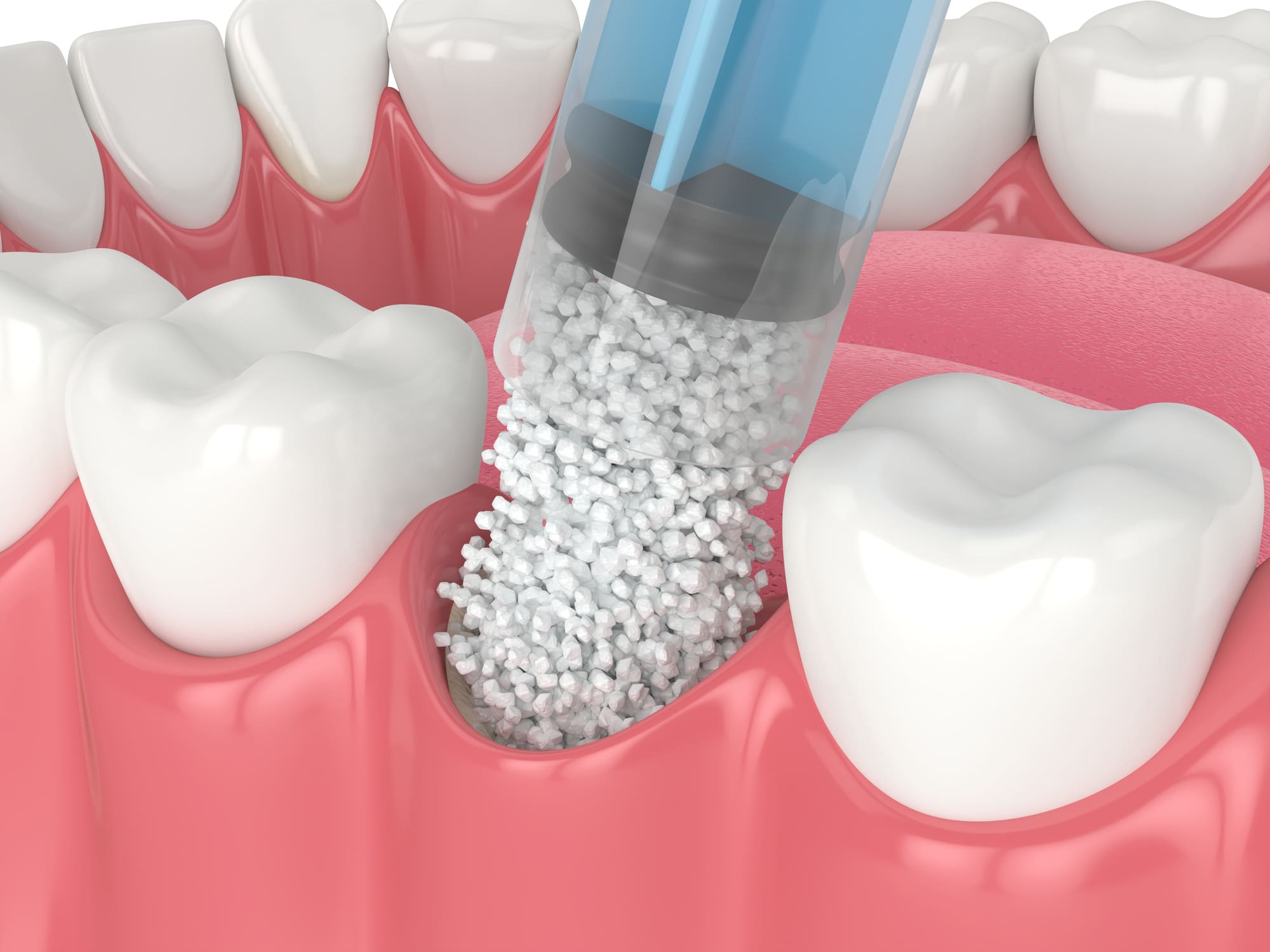
Bone grafting is a surgical procedure that involves adding bone or bone-like materials to the jawbone or other areas of the body to stimulate new bone growth. It is often performed to improve the structure and strength of the jawbone, especially in preparation for dental implants.
During the procedure, graft material is placed in the deficient area, providing a framework for new bone cells to grow and integrate. Over time, the graft material is replaced by the patient's natural bone, resulting in a stronger foundation for dental restorations or improved overall bone health. Bone grafting is a valuable technique in reconstructive and implant dentistry, helping to restore lost bone volume and promote long-term oral health.
Contact us at and schedule a consultation with our specialists. We will provide you with an accurate diagnosis and a personalized treatment plan to restore your smile and your confidence.
A bone graft is like filling a hole. The putty is made of bone particles that are placed in the hole where the tooth was and covered with a sterile bandage called a membrane. The body then dissolves the bone particles and integrates them into the person's bone.
The bone will heal, but it will heal in its own way, which means that the walls that used to house that tooth may collapse and cause you to lose bone height and width as well. The more bone you lose, the less likely you are to be a good candidate for an implant.
The bone graft must heal for a minimum of four months to be strong enough to support a dental implant. Ideally, the extraction is performed and we do the bone graft and membrane at the same appointment. The patient should then heal for four months. We then place the implant, which is just the titanium screw, and it should heal for a minimum of four months. Then we uncover the implant and let it heal for about a month. While it's healing, our lab will be perfecting the crown. Now, if it's a front tooth, there may be several visits to make adjustments so that the tooth color matches and blends perfectly.

Avoid bending, lifting, exercising or any other strenuous activity for at least 4 days.
Just as a fractured bone in the arm heals with a cast to keep it stable and immobile, the same process occurs in the jaw. The critical period to avoid excess pressure during chewing at the site is the first 2 months. Limit yourself to eating softer foods and chew more on the other side of the mouth.
Avoid caffeine for 48 hours after surgery. Do not smoke cigarettes! They will also contaminate the site and cause inadequate bone graft growth and/or implant integration.
We suggest allowing the blood clot to stabilize without vigorous rinsing or spitting for 3 to 5 days. After the first day: You may gently brush adjacent tooth surfaces as long as the brush does not disturb the graft site.