Tropicana Favicon

Schedule an appointment

Complete the form and one of our assistants will contact you to coordinate your appointment at our medical center.


X-rays and CT scans

We have the best technology for you to receive a more accurate diagnosis.

What can we detect with dental X-rays?

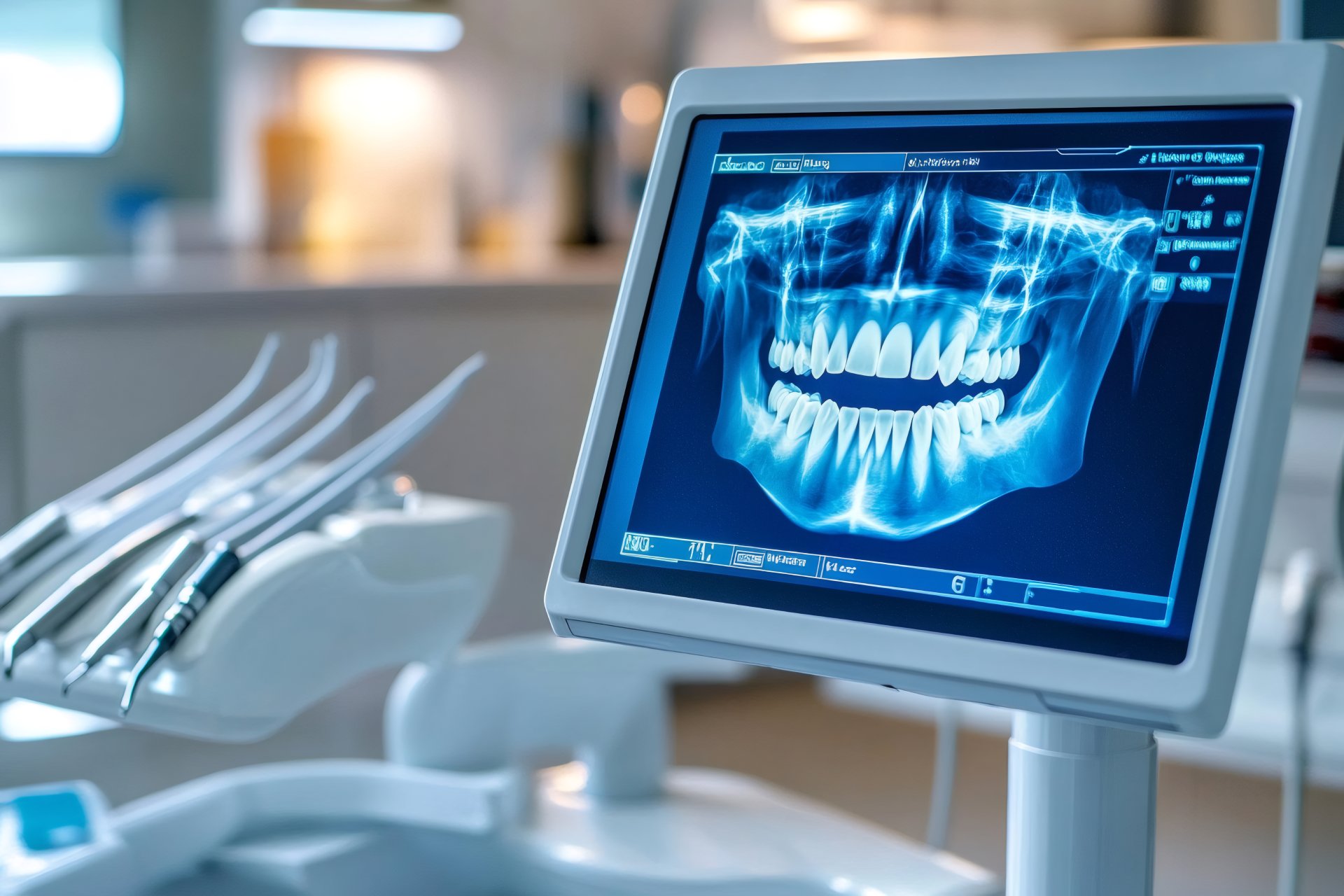
Dental X-rays use low levels of radiation to capture images of teeth, bones and surrounding tissues, which helps diagnose dental conditions not visible to the naked eye, such as cavities, impacted teeth and bone loss. Dental X-rays are a crucial tool in dentistry for diagnosing and monitoring oral conditions. These images provide valuable information about the teeth, revealing cavities that may be hidden between the teeth or beneath the surface. They also help us detect and assess the extent of periodontal disease by showing bone loss around the teeth. Dental radiographs also help to evaluate tooth position, identify impacted or partially erupted teeth and plan treatment. By capturing detailed images of the teeth and surrounding structures, dental radiographs allow us to provide accurate diagnoses and develop effective treatment plans to maintain and improve oral health.

Are dental X-rays safe?

In general, dental X-rays are considered safe when proper safety measures are followed. Radiation exposure from dental X-rays is typically very low and poses minimal risk to patients. We take precautions to minimize exposure by wearing lead aprons to shield the body. Advances in technology, such as digital X-ray systems, have significantly reduced radiation levels compared to traditional film X-rays. Any questions about our Hyperion X9 PRO equipment should be discussed with our dentists for personalized guidance.


For more information or to schedule an appointment, contact us. We are here to take care of your oral health!

Frequently Asked Questions

Why do I need a dental x-ray?

An x-ray provides us with an important preventive tool. It shows the condition of your teeth, their roots, the placement of the jaw, and the general composition of the facial bones. X-rays can help determine the presence or extent of periodontal disease, abscesses and many abnormal growths, such as cysts and tumors. X-rays can also show the exact location of impacted and unerupted teeth. They can pinpoint the location of cavities and other signs of disease that may not be possible to detect through visual examination.

Are all patients x-rayed every six months?

No. We base your X-ray schedule on our assessment of your individual needs, including whether you are a new patient or a follow-up patient, adult or child. In most cases, new patients require a full mouth set of x-rays to assess oral health status, including any underlying signs of gum disease and for future comparison. Follow-up patients may require X-rays to monitor the status of their gums or the possibility of decay.

What is a 2D panoramic radiograph?

Just as a panoramic photograph allows you to see a wide view, a panoramic x-ray will allow us to see the entire structure of your mouth in a single image. Panoramic x-rays show all of the upper and lower teeth and parts of the jaw.

What is 3D radiography or tomography?

3D dental imaging is sometimes referred to as computed tomography, which is the technology that makes it possible to create a full 3D representation of your mouth. A 3D dental CT scan uses X-ray technology to produce a concise image of your teeth, gums and jaw. It uses a device that rotates in a 360-degree arc around your head. Sometimes referred to as computerized cone beam technology (CBCT), this diagnostic test emits a low level of radiation and is safe enough to have, even if you are pregnant.

Is 3D imaging safe for patients?

Yes, 3D imaging is safe for dental patients. Modern CBCT equipment is designed to minimize radiation exposure while providing high quality images. The radiation dose from a CBCT scanner is often comparable or even lower than traditional dental X-rays, depending on the specific area being imaged.

Our Specialists