Complete the form and one of our assistants will contact you to coordinate your appointment at our medical center.

Dental bridges are restorative dental appliances that replace one or more missing teeth. These bridges provide both functional and cosmetic benefits, restoring proper chewing, speech and maintenance of facial structure, while improving the appearance of the smile.
By preventing adjacent teeth from shifting, dental bridges contribute to the overall oral health, confidence and improved quality of life for patients seeking a perfect tooth replacement solution. A dental bridge replaces missing teeth by anchoring a custom-made dental prosthesis to adjacent teeth or implants. Dental bridges can be fabricated from a variety of materials, such as porcelain, ceramic, metal alloys or a combination of these materials.
The type of bridge used depends on the location of the missing teeth, the condition of the adjacent teeth and the patient's personal preferences. Dental bridges can be an effective way to improve the appearance of the smile, restore the ability to chew and speak properly and prevent the remaining teeth from shifting out of place. However, it is important to maintain good oral hygiene to ensure the longevity of the bridge and avoid any damage to adjacent teeth.
Are you looking for a perfect and functional smile? Our dental bridges are the solution! Restore your smile and improve your quality of life.
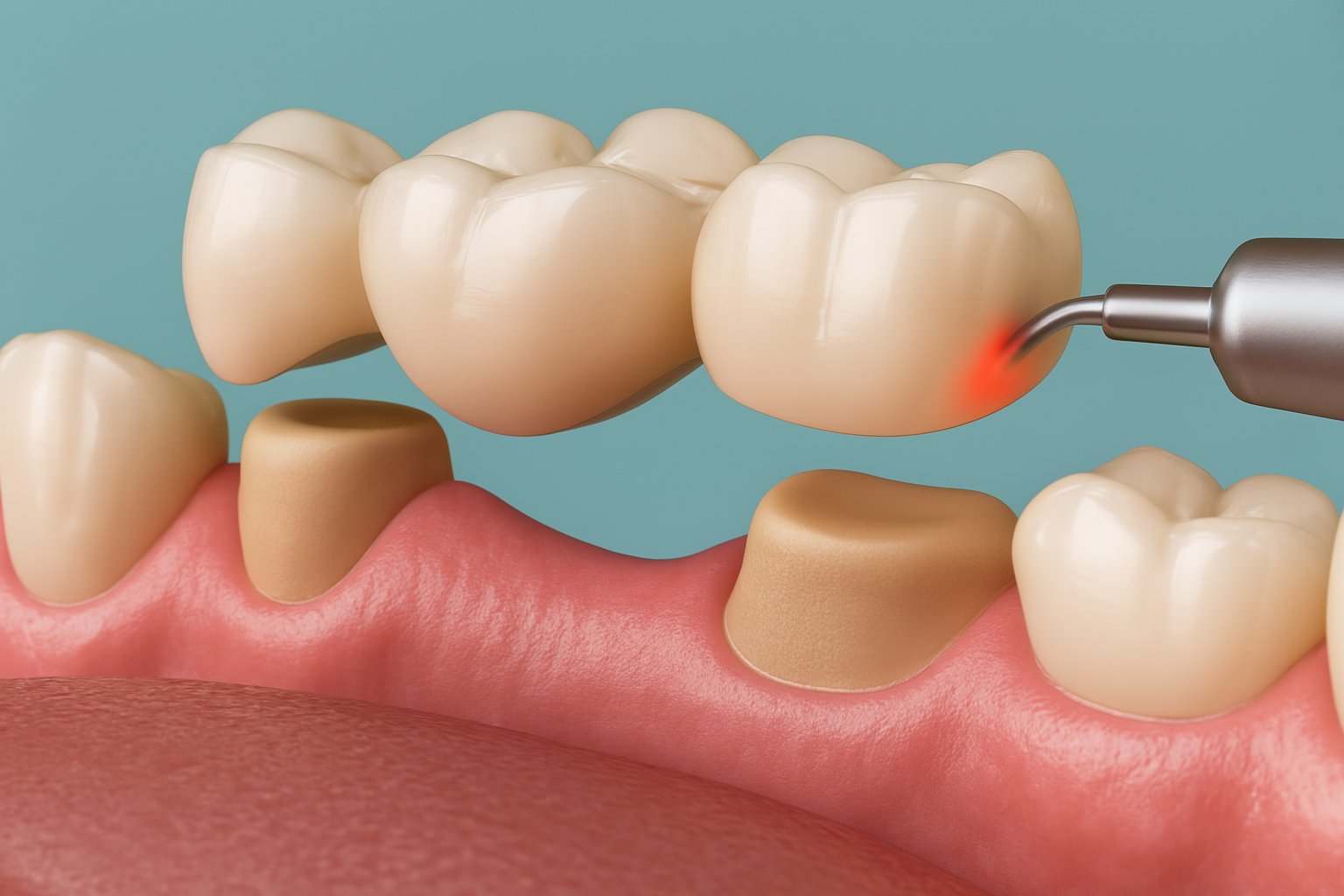
A dental bridge is a method of tooth replacement that involves the attachment of dental crowns to abutment teeth. It is a suitable solution for people who are missing a tooth or a section of teeth. For a fixed bridge, which is when the bridge is supported by natural teeth, the patient must have healthy adjacent teeth, although the dentist can restore damaged teeth with dental crowns.
No, the process of placing a dental bridge is non-invasive. This is in contrast to dental implants, which may require a minor surgical procedure for the placement of dental implants. The process for a fixed dental bridge that is not supported by a dental implant involves preparing the abutment teeth, placing the dental crowns, and attaching the dental bridge.

The advantages of a dental bridge are speed of treatment, long-term reliability and improvement of the patient's appearance (esthetics). Only a few visits are needed to complete the treatment and the devices can last more than a decade. The most notable drawbacks are that they are not as durable as dental implants and require more extensive treatment than a partial denture.
Patients can take care of their dental bridge with good oral hygiene and regular dental visits. It is also recommended to reduce the risk of dental trauma and limit sugar consumption.