


Complete the form and one of our assistants will contact you to coordinate your appointment at our medical center.
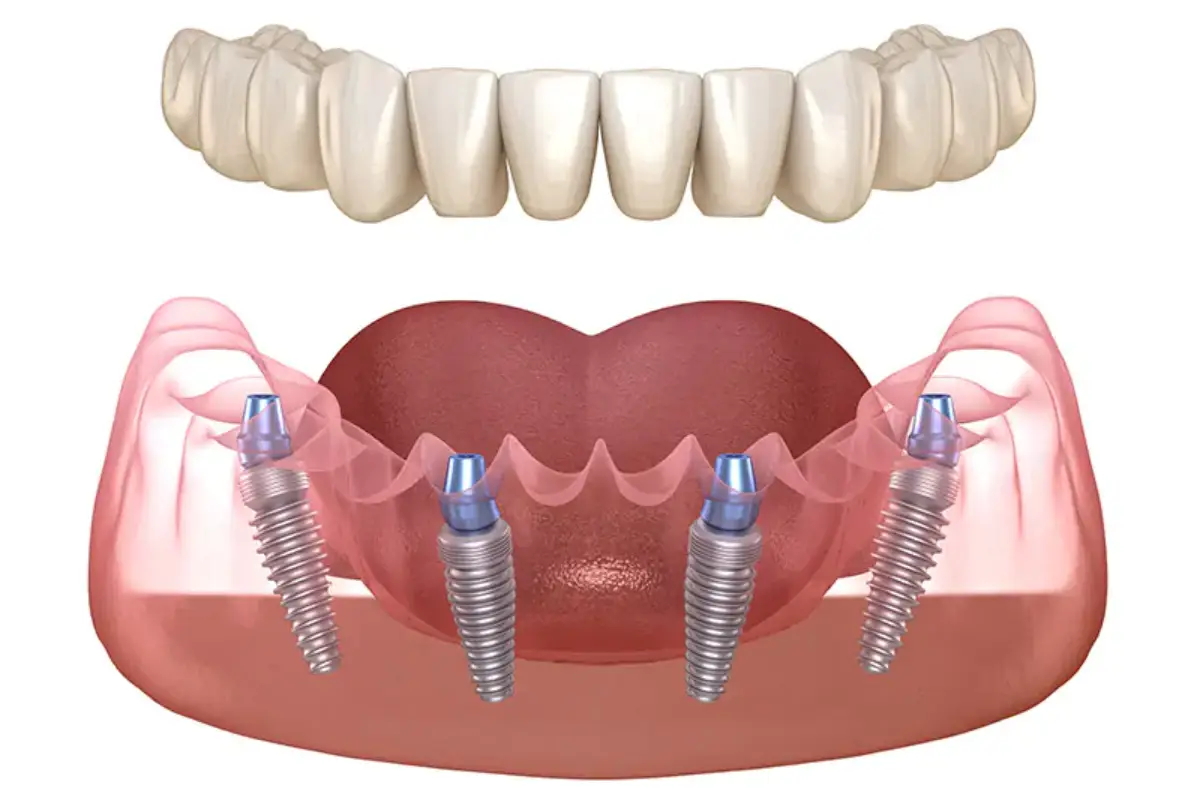
After choosing this procedure, you will be able to eat and enjoy all the foods you like. You can bite into an apple, easily eat raw vegetables such as salads, you can also enjoy meat. Many people enjoy an ear of corn which is also very easy to eat with a hybrid prosthesis. They are nice and natural and patients absolutely enjoy having them.
It is an excellent procedure for patients with complete dentures or those missing most or all of their teeth. Unfortunately, tooth loss is a common occurrence in adults. With dental implant technology, there is no need for the discomfort or inconvenience of dentures.
For more information or to schedule an appointment, contact us. We are here to take care of your oral health!
Dental patients who are not good candidates for All-on-4 have a history of poor oral health and have underlying diseases, such as uncontrolled diabetes, that would make healing after implant surgery difficult or unusually slow. Smokers often have poor healing and should stop smoking before undergoing dental implant procedures.
There is a misconception that recovery from All-on-4 implants is very painful. This is not the case: sometimes there is mild pain for a few days due to swelling, but the discomfort is comparatively very low compared to other surgical procedures.
The difference between All-on-4 and All-on-6 dental implants is the number of implants that are placed in the mouth. Both options provide a strong, stable base for the prosthetic arch or fixed prosthesis, resulting in a long-lasting, comfortable smile. Specialists will place as many implants as possible taking into account the amount of bone available. Implants need bone between each implant, so too many implants can be detrimental. At Tropicana Medical Center, implant placement is carefully planned well in advance of the surgery date for ideal results.
Extractions, bone reduction, dental implant placement, bone grafting if necessary and all the pieces for the provisional and definitive prosthesis are included in the procedure.
Although the initial procedure is performed in a single visit, the patient will return to have the final prosthesis placed once the implants have integrated into the bone (which takes about 3-4 months).
The transition line of the fixed denture should not be visible when the patient smiles, so some gingiva is fabricated on the prosthesis to hide the transition line.
With good medical health and patients who do not use nicotine, the success rate for dental implants is 97-99%. With underlying medical problems and tobacco/vape/nicotine patch and gum users, that percentage decreases dramatically. For these patients, dental implants are contraindicated. Patients taking long-term steroids and osteoporosis/osteopenia medications may also not be good candidates for implant procedures. Fortunately, tests are available to see if these patients are good candidates for these procedures.
All-on-4 dental implants are designed to be comfortable, as they do not press on your gums as traditional dentures would. Soon you will be able to bite down harder and experience again the normal sensation of enjoying hot or cold foods and all their flavors.
Progressive bone loss occurs when someone loses their teeth. Without bone stimulation from the roots (implants), the bone is rapidly resorbed (up to 25% in the first year). Dentures and crowns can mask the aesthetic problem, but do not resolve the bone loss in the jaw, ultimately leading to weaker jaw bone. Over time, the patient will have a sunken face appearance that is very unaesthetic. Dental implants stimulate the bone to prevent resorption and maintain good facial aesthetics. There will come a time when there is not enough bone to place the implants and it will be too late to perform this procedure.