Tropicana Favicon

Schedule an appointment

Complete the form and one of our assistants will contact you to coordinate your appointment at our medical center.


Botox application for bruxism and migraines

Botox Application for Bruxism and Migraines

What is Botox Application?

Botulinum toxin injections have proven to be a solution to reduce tension and relax the masseter muscles when bruxism is present and help prevent severe headaches, earaches, insomnia, jaw tension, decreased mouth opening and neck knots. Although bruxism is not a dangerous disorder, if left uncorrected it can cause permanent dental injuries, sleep disorders and aesthetic changes in the face. However, these all depend on the degree of severity of the condition and the frequency of the episodes.


Main consequences:

  • Dental wear and erosions in the teeth.
  • Damage to tooth enamel.
  • Increased tooth sensitivity.
  • Inflammation and retraction of the gums.
  • Overgrowth of the bones of the mouth.
  • Joint problems.
  • Headaches and earaches.
  • Cervical tension.
  • Insomnia.
  • Discomfort in opening the mouth, chewing and even speaking.
  • Increased size of the masticatory muscles, generating the “square face effect”.”
  • Premature development of wrinkles in the neck.

What does Botox treatment for bruxism consist of?

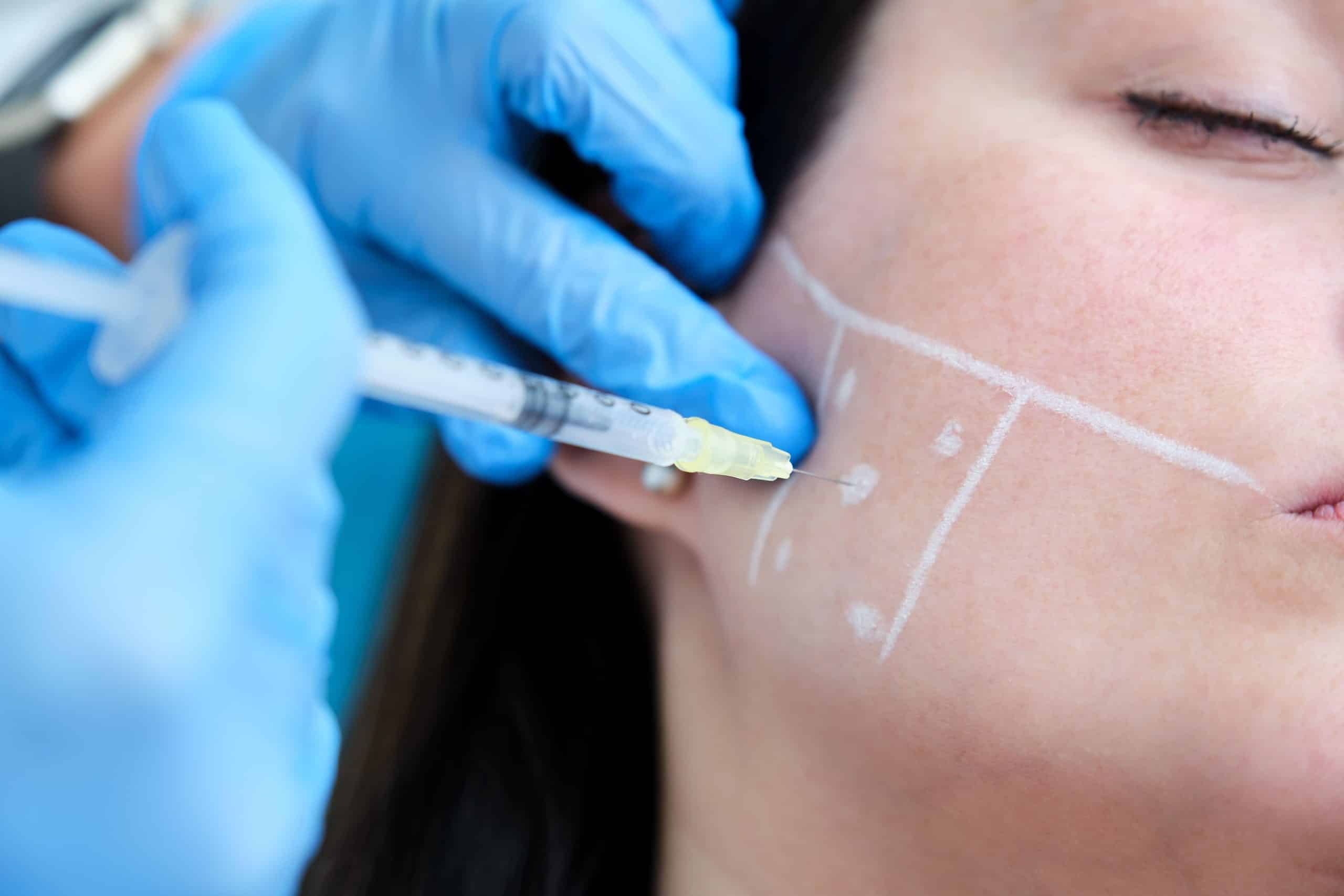
The application of Botox for bruxism is an outpatient and minimally invasive treatment. The patient will undergo a comprehensive aesthetic evaluation, where our professionals will assess your case and estimate how many units of Botox will be used according to your needs. Topical anesthesia is used to avoid the discomfort of the puncture and then proceed to apply the Botox injections in the masseter muscle. In this way, we are able to relieve the tension produced by this involuntary act, relaxing the blocked muscles, without affecting the chewing capacity. The session may take about 30 minutes.

Frequently Asked Questions

Really? botulinum toxin to tighten the jaw?

Most people are familiar with botulinum toxin for removing wrinkles or plumping lips. But recent studies published in Neurology and Pain Research and Management have shown that the muscle-relaxing properties of botulinum toxin hold promise for stopping jaw clenching and teeth grinding. At least for some time. According to a study published in Saudi Pharmaceutical Journal, botulinum toxin has also been shown to help treat a variety of non-cosmetic conditions in addition to bruxism. Botulinum toxin temporarily paralyzes muscles, so it is equally useful in treating other conditions of the head and face (such as facial dystonia) where certain muscles need to be relaxed.

How does botulinum toxin work for bruxism?

If you are being treated with botulinum toxin for bruxism, a small amount will be injected into the muscles responsible for jaw movement, most likely the masseter muscle, which is responsible for chewing. It may also be injected into the frontalis and temporalis muscles, depending on your specific needs. Botulinum toxin will reduce tightness and also help relieve tension and headaches you may experience. Botulinum toxin usually takes effect 1 to 3 days after injection (but can take up to two weeks), and the effects can last 3 to 6 months.

Are there side effects of using botulinum toxin for bruxism?

According to the Mayo Clinic, botulinum toxin is relatively safe when injected by an experienced physician. However, there are some possible short-term side effects, such as:

  • Pain, swelling or bruising at the injection site
  • Headache or flu-like symptoms
  • Drooping eyelid or arched eyebrows
  • Crooked smile or drooling
  • Dryness or excessive tearing of the eyes

Our Specialists